Fintechs add crypto functionality without building it from scratch by integrating a crypto infrastructure API that supplies wallets, custody, liquidity, compliance and payouts behind one integration. Instead of running nodes, securing keys and negotiating licences, the team connects to a provider and spends its time on the product.
In 2007, MPesa changed Africa forever. A simple mobile money service built to address Kenya’s financial exclusion became a blueprint for fintech success. Today, fintech startups are solving problems from cross-border payments to digital banking, but not every idea scales. For every success story, there are countless failures of products that couldn't survive fraud, regulatory hurdles, or infrastructure strain.
So, what makes a fintech product functional and scalable? More importantly, how can modern developers and businesses shortcut years of trial and error by leveraging existing infrastructure?
Let’s break it down.
Why Fintech Is Hard (and Why It’s Worth It)
The finance industry is built on trust, and trust isn’t given freely. Before jumping into the “how,” it’s imperative to understand why building fintech products is uniquely challenging:
- Regulatory Complexity – Different countries, different rules. What works in Kenya might not fly in Ghana. A study titled "Legal Challenges for International Fintech Startups" highlights that fintech companies often face complex regulations across different jurisdictions, which can hinder market access and rapid customer adoption.
- Security & Fraud Risks – Handling money means fighting off cybercriminals from day one. Now, it can be even more complex in the modern world of AI. A systematic review of "Cybersecurity Threats in FinTech" discusses the sophisticated cyber threats that fintech companies face, especially with the rise of AI-powered attacks. This is not to scare a promising founder but to keep in mind that there are unforeseen circumstances in the real world.
- Infrastructure Bottlenecks – Scaling fintech is nothing like scaling a social media app. Payments, banking services, and financial networks rely on infrastructure that must be stable, compliant, and secure. A system failure isn’t just a bug; it can mean lost money, lost trust, and lost customers
- User Adoption & Trust – Even the most innovative fintech product won’t survive if people don’t trust it with their money. Trust takes time to build and seconds to lose. Clear communication, strong security, and a seamless user experience aren’t optional–they’re literally the jam to the bread.
Despite these challenges, fintech remains one of the most rewarding spaces for innovation. The right product can change lives, giving people access to finance, enabling cross-border trade, and charting courses of new economic opportunities. Crypto adds its own layers of difficulty, from key management and liquidity to a different licensing picture in every market, which is why most fintechs add it through a partner.
How do fintechs add crypto without building it from scratch?
Most fintechs follow the same five steps:
- Pick the first feature. Start with one capability customers will use, such as wallets, stablecoin payments, cross-border payouts, conversion or cards.
- Choose build, buy or a mix. Build the customer experience yourself and buy the infrastructure underneath: custody, liquidity, conversion and compliance tooling.
- Integrate through the API. Create wallets, request quotes, send payouts and listen for webhook events from your own backend, using the provider’s documentation first.
- Settle the compliance model. Decide whether you operate under a licensed partner or under your own licence, and which KYC and AML checks sit with you and which with the provider.
- Launch, monitor and add features. Release to a small group, watch transaction monitoring and reconciliation, then add the next capability on the same integration.
Which crypto features can a fintech add through an API?
- Wallets for Bitcoin, USDT and USDC, custodial or non-custodial, through Wallet-as-a-Service.
- Cross-border payouts funded from crypto and delivered in local currency, through global payouts.
- Conversion and trading, including BTC/USDT and USDC/USDT, through digital asset trading.
- Virtual cards your business can create on demand, through card issuing.
- Treasury across currencies and regions, through Corporate Treasury.
Build or integrate: what you skip
| Capability | Building it yourself | Integrating an API |
|---|---|---|
| Wallets and keys | Run nodes, secure private keys, monitor every transaction | Create and manage wallets through one API, with webhook events |
| Conversion and liquidity | Source liquidity and build order routing | Request quotes and convert through the provider’s routing |
| Local payouts | Set up banking relationships country by country | Pay out in local currency from crypto in a single call |
| Compliance | Build KYC, AML and monitoring, and apply for licences | Use the provider’s checks, or run under your own licence |
Blueprint for Building a Functional Fintech Product
Start with the Problem, Not the Solution
The best fintech products don’t start with only sleek apps—they start with a real problem. One of the trickiest industries to navigate is digital currencies and assets, especially when it comes to making cross-border transactions seamless and leveraging crypto-powered financial services for African businesses.
Before getting into solutions, take a step back and ask :
- What major financial problem am I solving?
- Is my solution actually cheaper or faster than what’s already out there?
- Am I removing friction or just adding another app to the pile?
Mariblock recently highlighted a survey by Ripple and the U.S. Faster Payments Council, where 97% of respondents believe blockchain will reduce both the time and cost of cross-border payments within three years. Yet, only 17% have integrated crypto payments, with regulatory uncertainty being the biggest hurdle
At the same time, 24% of respondents from Africa and the Middle East expected most merchants in their regions to accept crypto payments within a year, while 64% believed it would take up to three years.
This tells us two things: first, people already see the potential of FinTech solutions in this space. Second, there’s a gap between belief and action. Moving from 17% adoption to a majority will require education, trust-building, and clear value. And for the 64% who think adoption is still years away, the right fintech product could bring that future much closer.
Whether you’re working on cross-border payments, Banking-as-a-Service, SME financing, Virtual Cards, digital wallets, or payroll solutions, the key is simple: don’t only build. Solve.
Regulatory & Compliance Readiness
Many promising fintech startups have disappeared, not for lack of innovation but because they overlooked the power of regulation. Rather than spending years obtaining licenses, it is suggested to partner with compliant platforms.
- Understand the compliance requirements of your target market.
- Work with licensed partners to offload regulatory risks.
- If expanding across borders, ensure multi-country compliance from the start.
For crypto, this means choosing whether to operate under a provider’s compliance setup or under your own licence. Bitnob’s Wallet-as-a-Service supports both: you can use Bitnob’s infrastructure, or plug in under your own compliance framework if you are already licensed.
Building a Secure & Scalable Infrastructure
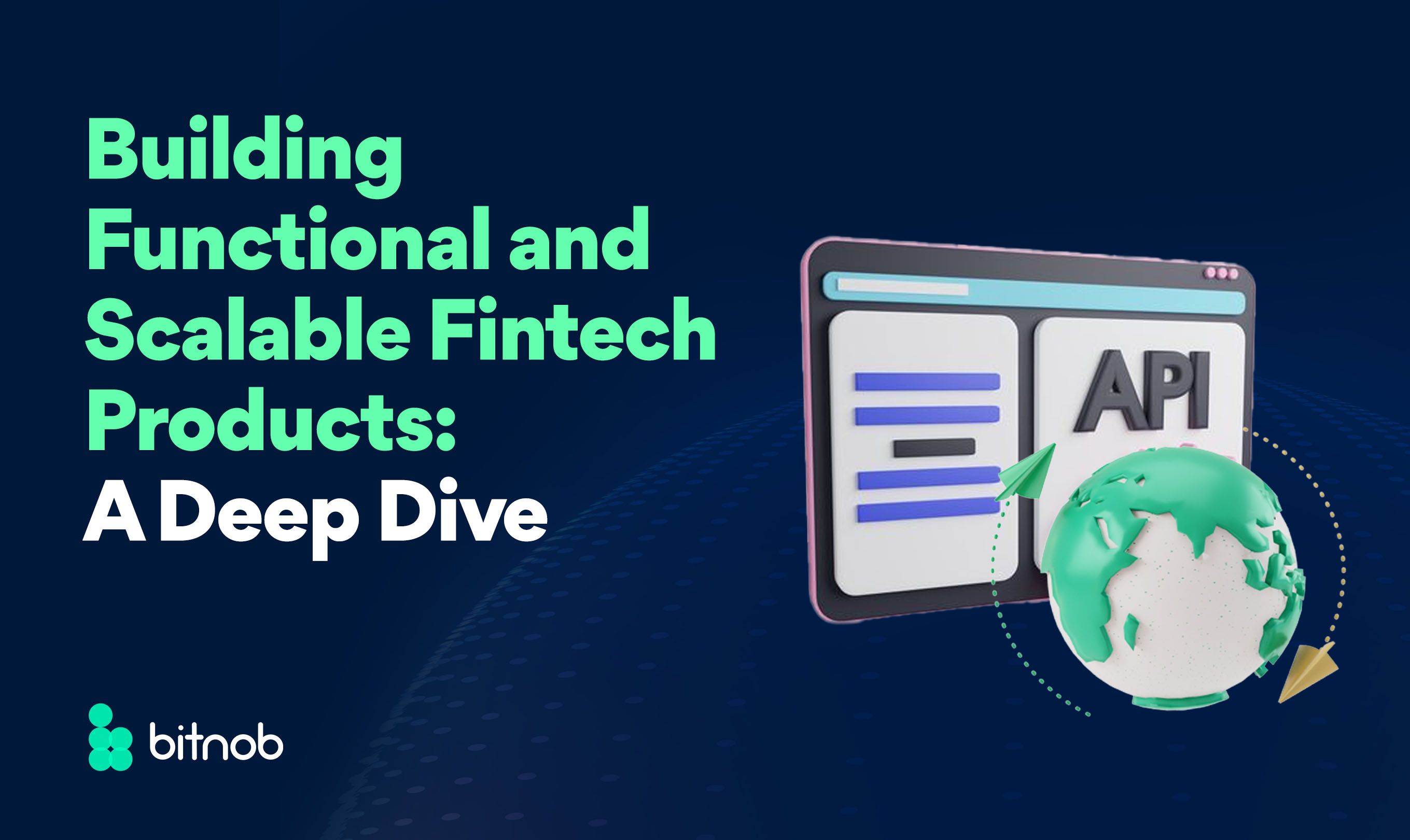
Instead of reinventing financial rails, businesses can leverage secure APIs to handle transactions, liquidity, and security while focusing on innovation and user experience. The right API can bridge the gap between complex financial processes and seamless integration, making it easier for developers to build robust fintech solutions that scale effortlessly.
- Security-first approach: Protect user funds and data from breaches.
- Uptime & Reliability: A fintech app that crashes during a transaction loses trust instantly.
- Scaling beyond 1,000 users: Start with scalable architecture to avoid growing pains.
Designing a Seamless User Experience (UX)
Users appreciate barrier removals over complicated processes. Seamless integration of financial services into apps can significantly improve user engagement and trust.
- Trust signals matter: Show security features, encryption details, and transparent fee structures.
- Speed is king: The fewer clicks to complete a transaction, the better.
- Onboarding must be frictionless: Users should be able to sign up and start transacting in minutes.
Monetization & Growth Strategy
The key is to strike a balance between free services that drive adoption and premium features that sustain revenue.
- Offer free transactions but charge for premium features.
- Use subscription models for businesses that require advanced services.
- Introduce cross-border payments and digital currency transactions as new financial offerings.
Scaling Your Fintech Product (Without Breaking It)
Growth is exciting, but it can also be dangerous if your product isn’t built to handle scale.
A common failure: A startup successfully launches a digital wallet, but when transactions surge, their infrastructure collapses, causing outages and user frustration.
To scale effectively:
- Stress-test your infrastructure before rapid growth.
- Use cloud-based architectures to manage high transaction volumes.
- Leverage financial APIs to scale without overhauling your backend.
Ensuring transaction speed and security is non-negotiable. A fintech product must handle thousands of transactions per second without service disruptions. For the payments side of scaling, read how to build scalable global payment systems using Bitnob infrastructure.
Bringing It All Together
The best fintech products are those that:
- Solve a real problem – Not just another payments app.
- Stay compliant from the start – No regulatory shortcuts.
- Scale seamlessly – No crashes during peak transaction times.
- Leverage existing infrastructure – Don’t reinvent the wheel if you don’t need to
Developers and businesses looking to integrate fintech solutions efficiently can significantly benefit from secure and scalable financial APIs that handle compliance, liquidity, and transactions seamlessly.
Frequently asked questions
How do fintechs add crypto functionality without building it from scratch?
Fintechs integrate a crypto infrastructure API that provides wallets, custody, liquidity, conversion and compliance tooling, then build their own customer experience on top. This avoids running nodes, securing keys and sourcing liquidity in-house.
What is crypto-as-a-service?
Crypto-as-a-service means a provider hosts the crypto infrastructure, such as wallets, trading, payouts and compliance, and exposes it through APIs. A fintech plugs those capabilities into its own product instead of building them.
What is cryptocurrency in fintech?
In fintech, cryptocurrency is used as a settlement and payment rail. Bitcoin and stablecoins such as USDT and USDC let fintechs move value across borders around the clock and convert it into local currency at the other end.
Which crypto features should a fintech add first?
Start with the feature customers will use most. Wallets, stablecoin payments and cross-border payouts are common first choices, followed by conversion, cards and treasury tools on the same integration.
Does a fintech need its own licence to offer crypto?
It depends on the market and the feature. Many fintechs operate under a licensed provider, and others bring their own licence and plug into the provider's infrastructure. Check the rules in each country you operate in.
Should a fintech build or buy crypto infrastructure?
Most buy the infrastructure and build the experience. Building means running nodes, key management, liquidity and compliance before the first customer can use the feature, while integrating an API lets the team launch on infrastructure that already exists.
Final Thoughts: The Playbook for Fintech Builders
Fintech is one of the most challenging yet rewarding industries to build in. It requires precision, compliance, security, and deep user trust. But no one builds alone; the smartest founders and developers know when to leverage existing tools to bring their vision to life faster.
If you’re building the next big thing in fintech, the question isn’t “Can I do this alone?” but “How can I build smarter, faster, and more securely?” Your biggest answer is wrapped in a word: Leverage.